
One question we hear from homeowners after a major storm is:
“Can I sell my house in New Orleans if it has storm damage?”
The short answer is yes.
Storm damage doesn’t automatically mean you have to repair everything before you can sell your house. Depending on the condition of the property, the extent of the damage, your insurance situation, and how quickly you want to move on, you may have several options.
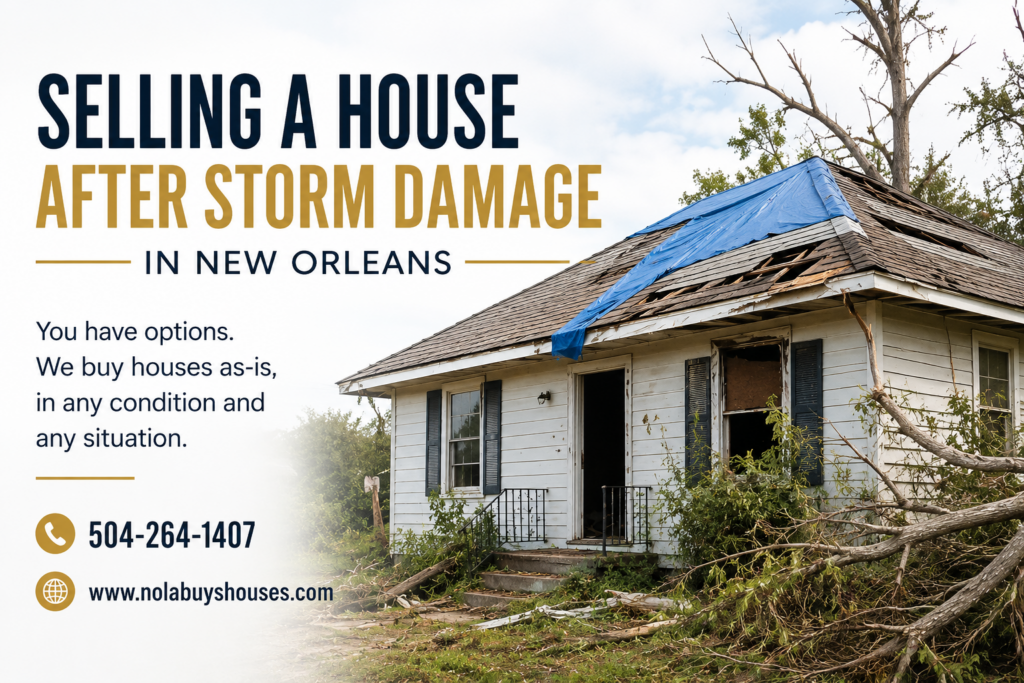
After buying houses throughout the Greater New Orleans area for more than 20 years, I’ve seen just about every type of storm damage you can imagine. Missing shingles, flooded houses, roof leaks, water intrusion, damaged siding, fallen trees, mold, and homes that needed major repairs after hurricanes.
The important thing is figuring out which option makes the most sense for your situation.
Let’s take a closer look.
What Kind of Storm Damage Does the House Have?
Storm damage can mean a lot of different things.
Sometimes it’s relatively minor. A few shingles may be missing, a fence may have blown down, or some siding may need to be replaced.
Other times, the damage is much more significant.
A damaged roof can allow water into the house. Flooding as well. That water can affect ceilings, walls, insulation, flooring, and electrical systems. If moisture sits for too long, mold can become another problem.
We’ve also seen properties damaged by fallen trees and homes that sat vacant after storms without anyone realizing additional problems were developing.
Before deciding what to do, you need to understand the overall condition of the property.
Do You Have to Make Repairs Before Selling?
Not necessarily.
If the damage is minor and you’re planning to list the house traditionally, making repairs may help you attract more buyers and possibly get a better price.
But repairing storm damage isn’t always simple.
After a major storm, contractors can be extremely busy. Materials may be harder to find, prices can increase, and what initially looks like a small repair can turn into a much larger project.
You may start by replacing part of the roof and discover damaged decking underneath.
You open a wall and find water damage or termite damage.
Then you discover mold.
Before you know it, you’re managing a renovation you never planned on doing.
For some homeowners, making those repairs makes sense.
For others, it doesn’t.
What About an Insurance Claim?
If you have homeowners or flood insurance and the damage may be covered, you’ll want to understand where you are in the claims process.
Maybe you’ve already received insurance proceeds.
Maybe the claim is still being adjusted.
Maybe there’s a disagreement over the amount of damage.
Or maybe the damage isn’t covered at all.
Insurance claims can affect a real estate transaction, so if you have an open claim, it’s important to discuss the situation with your insurance company, title company, or another appropriate professional before closing.
Don’t assume you have to finish every repair before you can explore selling the property. Sometimes you can even sell the property and preserve your insurance claim to still get paid out once it’s settled, even after the house is sold.
Will Storm Damage Affect the Value?
Usually.
How much it affects the value depends on the extent of the damage and what it will cost to make the property whole again.
A house with a few missing shingles is very different from one with major roof damage, water intrusion, mold, and damaged flooring.
Buyers are going to consider the cost of repairs along with the time and risk involved in completing them.
There’s also a perception issue.
Many traditional buyers see signs of significant storm or water damage and immediately move on to the next house. They may not want to deal with contractors, insurance questions, or the possibility of discovering additional problems after closing.
That doesn’t mean the house can’t be sold.
It simply changes who your likely buyer may be.
What If the Buyer Is Getting a Mortgage?
Financing can make things a little more complicated.
Depending on the type and severity of the damage, a lender or insurer may require certain repairs before the buyer can complete the purchase.
That can create a difficult situation for a seller who doesn’t have the money, time, or desire to repair the house first.
This is one reason homeowners with heavily damaged properties sometimes consider selling directly to a cash buyer.
Without traditional financing involved, there may be fewer repair-related hurdles to get through before closing.
Can You Sell a Storm-Damaged House As-Is?
Absolutely.
We buy storm damaged houses throughout the Greater New Orleans area, and we don’t expect homeowners to make a property perfect before calling us. As a matter of fact, we would prefer they do nothing at all to the house and let us do the repairs.
We’ve purchased houses with damaged roofs, water intrusion, mold, deferred maintenance, and properties that needed extensive renovations.
If you sell a house as-is, you may be able to avoid hiring contractors, managing repairs, cleaning everything out, and waiting months before putting the property on the market.
Of course, selling a house as-is isn’t automatically the right decision for everyone.
If you have the time and resources to repair the house, you may decide that fixing it and listing traditionally makes more sense. You need to take a serious look at the numbers as you weigh your options.
The point is that you do have options though.
Don’t Let the House Sit Too Long
This is something I think is especially important after storm damage.
A damaged property can get worse when it sits.
A small opening in the roof can allow more rain inside. Moisture can lead to mold. Damaged wood can deteriorate. An empty property may also go weeks without anyone noticing a new leak or other problem.
If you’re not living in the house, make sure someone is checking on it regularly.
Waiting without a plan can sometimes turn a manageable repair into a much more expensive one.
Final Thoughts
So, can you sell a house after storm damage?
Yes.
You don’t necessarily have to repair the property completely before selling it.
The right decision depends on the extent of the damage, your insurance situation, how much money you want to put into repairs, and how quickly you want to move on.
Sometimes repairing the house and listing it is the best option.
Other times, selling the property as-is makes more sense.
Every situation is different.
If you have a storm-damaged house in the New Orleans area and aren’t sure what to do next, I’d be happy to take a look and explain your options. You don’t need to repair the roof, replace damaged flooring, remediate mold, or clean everything out before calling.
There’s never any pressure or obligation—just a straightforward conversation about the property and what might make the most sense for you.
504-264-1407